
 English
 Arabic
 Chinese
 Dutch
 Finnish
 French
 German
 Hebrew
 Hindi
 Italian
 Japanese
 Korean
 Polish
 Portuguese
 Russian
 Spanish
 Swedish
Understanding Push and Pull Quick shifters
 charlie@ftecu.com
Posts: 31Staff User
Hey,
I wanted to make this post to give a general idea of how these sensors work.
Push and Pull
You've likely noticed on our quickshifter listings that we specify Red/Yellow wires for the pull direction and Blue/Green wires for the push direction.
The image below illustrates the forces applied during a push versus a pull, with the arrow colors indicating which wires would be used for each type of shift.
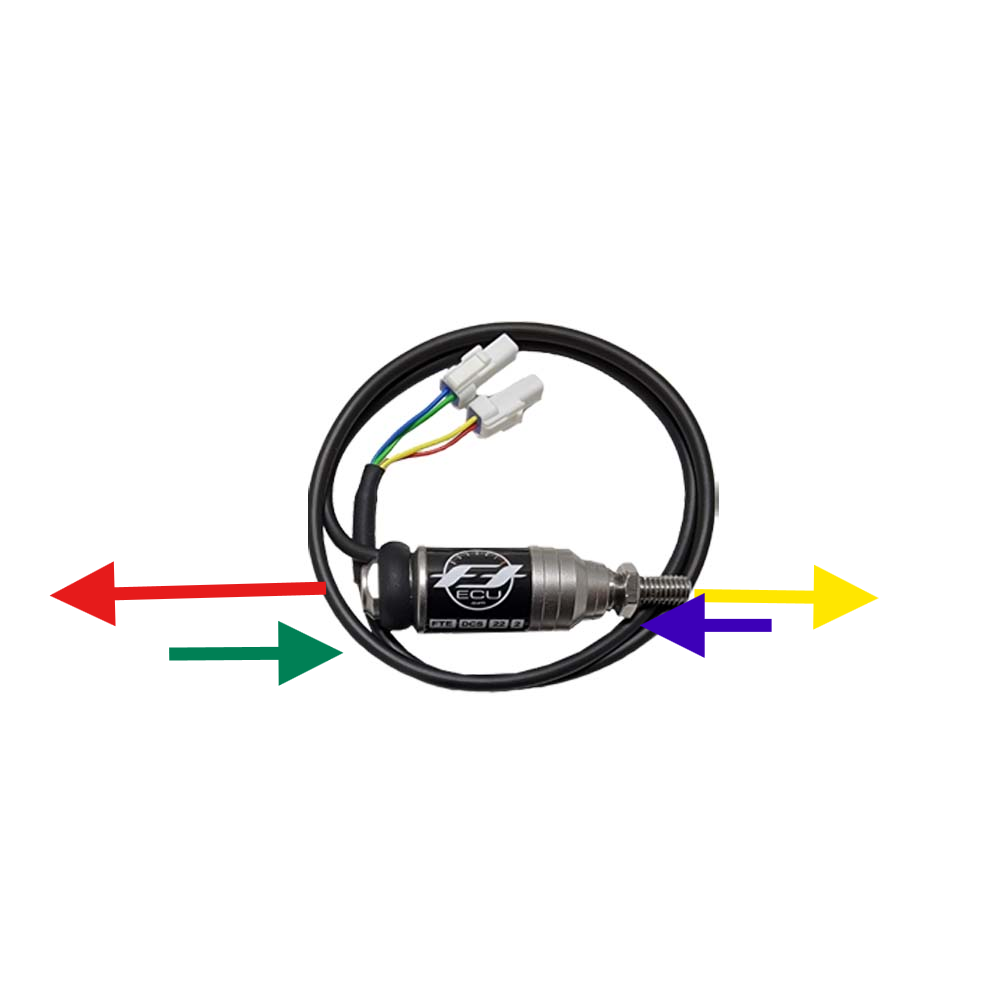
To paint a better picture, imagine you're setting up and installing your quickshifter.
Start by upshifting on your bike with the sensor installed. Pay attention to whether the ends of the sensor are being pushed together, compressing the sensor, or pulled away from each other, as if the sensor is being stretched apart.
If the ends of the sensor are being pushed toward each other during an upshift, you would use the Blue/Green connector as your upshift connector.
If the ends of the sensor are being pulled away from each other during an upshift, you would use the Red/Yellow connector instead.
Autoblip
For autoblip, the process is essentially the same, except you'll be looking at what happens during a downshift instead of an upshift.
Start by downshifting on your bike and observing whether the sensor is being compressed or pulled apart.
If the ends of the sensor are being pushed toward each other during a downshift, you would use the Blue/Green connector as your downshift connector.
If the ends of the sensor are being pulled away from each other during a downshift, you would use the Red/Yellow connector instead.
On your autoblip harness, you'll notice two positions labeled UP and DOWN.
Let's say you've determined that your sensor is being compressed during a downshift. In this case, you would insert the Blue/Green connector into the DOWN position on the autoblip harness.
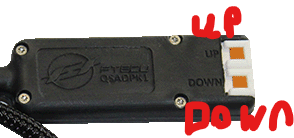
This occasionally proves to be the fix to many Q/S and A/B issues!